| 708-406-9984 * 6943 W. North Ave *Oak Parl, IL 60302 August 2026 |
| |
|
|
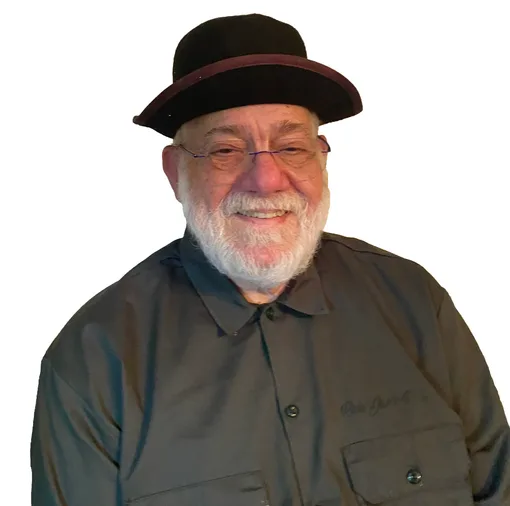
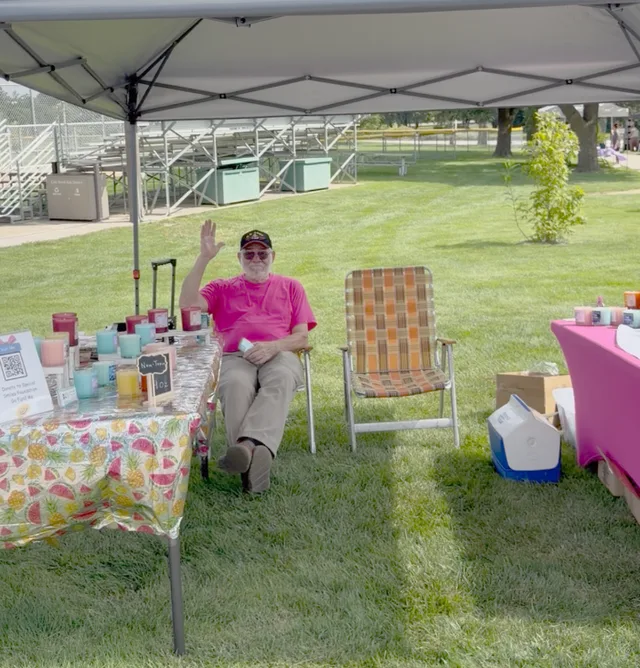
| | | | I have been getting outside my comfort zone of late. One Saturday this month, Sally and I attended a softball tournament at Central Park in Oak Brook. Attending the tournament is not the part that is me ‘stepping out.’ Rather, pitch a tent for Aroma of Hope and Special Smiles Foundation. Normally we do these events at my community center and the ladies in my office take care of all the details. I simply show up. They make me look good |
| |
|
|
| At these events, Iam seeing mostly familiar faces; patients, friends,and family. But, at the softball tournament it wasj ust me and Sally. We were part of the on-site craft market that ran along side the game, allowing players and spectators to shop from local small business vendors. We pitched a tent. |
| |
|
|
| That still was not the uncomfortable part for me. I figured we would set up the tent and greet people as they stopped by. Unfortunately, the tournament was somewhat of a bust. This was the second annual “Diamonds for a Cause” 16-inch softball tournament. The event was a fund raiser to benefit the American Cancer Society. We felt compelled to participate because of our personal history with cancer. The format of the tournament was sixteen teams would play in double elimination. Each team was to pay a $350 entry fee. A cash payout would be awarded to the top three finishing teams The event was scheduled to start at 9am. Not long after that we were given the bad news. Only eight teams had signed up, two never showed up, and two did not pay their entry fees. The remaining four teams decided to leave and compete in another tournament.That left us and the rest of the crafters wondering what to do now. In true community form, the crafters stuck it out until noon and greeted whatever foot traffic there was in the park. At Sally’s prompting,I visited about twenty-five of the other booths. That was the uncomfortable part. You may know me in the office to be relaxed and a bit of a jokester and storyteller. Outside of the office though, I am a bit of an introvert. Fighting through my discomfort, I introduced myself as a local dentist who treats special needs patients. I asked people to pass along the word to anyone they might know that had a special needs family member. Everyone was polite and open to my request. However, a few responses from people were unexpected, yet validating to my cause. One gentleman has a nephew whose family was looking for a dentist. Two ladies had children that needed a dentist and one of them almost burst into tears because she could not believe what she had heard me say to her. She was in rather urgent need of a dentist for her 11-year-old. Despite her daughter’s age eventhe local Pedodontists in her area had refused totreat her daughter. Finally, another gentleman said he drives a school van that transports special needs students at a nearby high school; and his wife is a special needs teacher at the same school. He took several of my cards to pass around. It was out of my comfort zone to reach out, but I felt good about doing it, and Sally was very pleased as well. We went to the tournament with the intention of raising money for the Special Smiles Foundation selling Aroma of Hope candles. We sold one. So, was it a bad day or a good day or both? As for raising money, we did better than did the tournament by raising money. I did have the chance to meet some wonderful people and hopefully be able to serve a few more patients in need. Time will tell Dr. Jim |
| |
|
|
| Maria & Marlo: Finding A Dental Home Together |
| |
|
|
| Some people inherit a house. Some inherit money.Patient Marie Perez says she inherited something much more important:“a whole human being.”That human being is her younger brother, Marlo, who has Down syndrome/ After their father, a Marine and Vietnam veteran, passed away from leukemia, Marie took responsibility for her mother and Marlo. At the time, Marie’s career in clinical trials required her to travel four or five days a week. What she didn’t realize was that her mother was developing Alzheimer’s disease, and Marlo’s care was suffering as a result. After her mother passed, Marie became Marlo’s primary caregiver.That was when she discovered just how serious his dental problems had become. His teeth had gone withoutany real care for years. He was not eating well, complained about his jaw and was clearly in pain. Finding someone to help proved far more difficult than Marie expected. After eighteen months, Marie got Marlo into the adult Down syndrome center. The center gave her a list of approximately 30 dentists. She started wi th the three most highly recommended by the center. One proposed extracting more than a dozen of Marlo’steeth, adding several crowns and completing the treatment through multiple procedures. But for Marie, something did not feel right. She passed on that treatment. Marie went back to the list and kept searching. She called and emailed office after office. Some were not accepting new special-needs patients. Others treated children with special needs, but not adults. Still others would only continue treating special-needs adults whohad been patients since childhood. Then she found me. |
| |
|
|
| From the first visit, Marie said she noticed something different.“It was fresh air,”she recalls.“They were friendly. They were kind.”More importantly, we asked Marie questions. She said, “They understood that while they knew dentistry, I (Marie) knew Marlo. Instead of rushing into extensive treatment, we proceeded gradually. We gave Marlo time to become comfortable, developed a home-care routine and worked to determine which teeth could besaved. Ultimately, only a few teeth needed extraction. Today, Marlo’s visits are primarily routine maintenance. He knows the people at the office, recognizes the surroundings and is comfortable here. But something else happened along the way. Marie became a patient, too. For years, while caring for her father, mother and Marlo, she had put her own dental care aside. As Marie puts it,“We caregivers. We neglect ourselves.”One day,a team member asked a simple question:“You’re taking care of him. What about you?" Today, Marie and Marlo share dental appointments, and that has actually helped Marlo. He can watch his sister comfortably sit in the dental chair and understand that this is a safe place for both of them. For Marie, that may be one of the greatest benefits of all. She didn’t simply find Marlo a dentist. Marie and Marlo found a dental home, together. |
| |
|
|
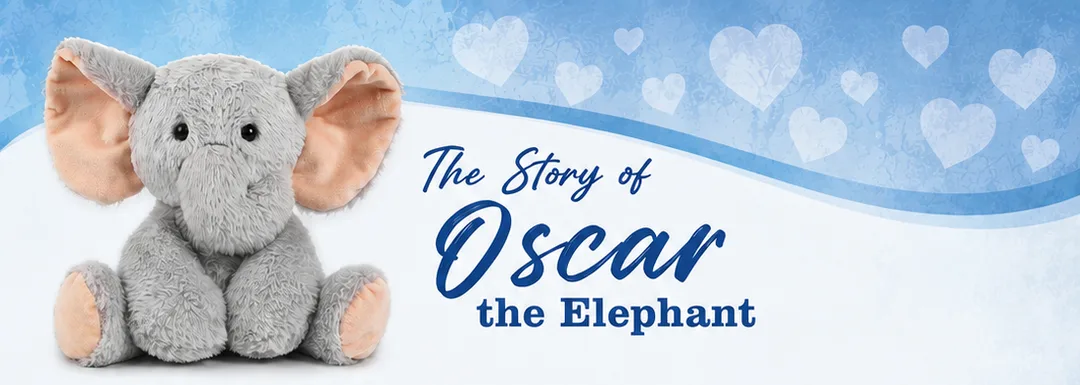
| Every family has its stories. This is the story of Oscar the Elephant.
Long before the Special Smiles Foundation was created, there was a very special person named Oscar Montville. He is one of the special-needs patients who found his way to Dr. Jim Scapillato's practice. The story is told in the book Disabled Fables, by Oscar's father. They are special people who truly understand the meaning of care for someone with special needs.
For Dr. Scapillato, care has never been simply about dentistry. It is about patience, trust, understanding and dignity and recognizing that the person in the chair is not a diagnosis or disability.
He or she is a person who deserves the same compassion, respect and quality of care as anyone else.
When the practice wanted something to represent its special-needs patients, Oscar the Elephant was born and named in Oscar Montville' s honor.
Elephants live in families. They form powerful bonds, protect one another and are known for their patience, intelligence and compassion. Most importantly, when a member of the herd needs help, the others don't leave them behind. The herd gathers around them.
That is what Oscar represents.
He represents every person who may experience the world a little differently. Every parent who has wondered if someone would have the patience to understand their son or daughter. Every caregiver who has struggled to find the care their loved one needs. And every patient who deserves to know:
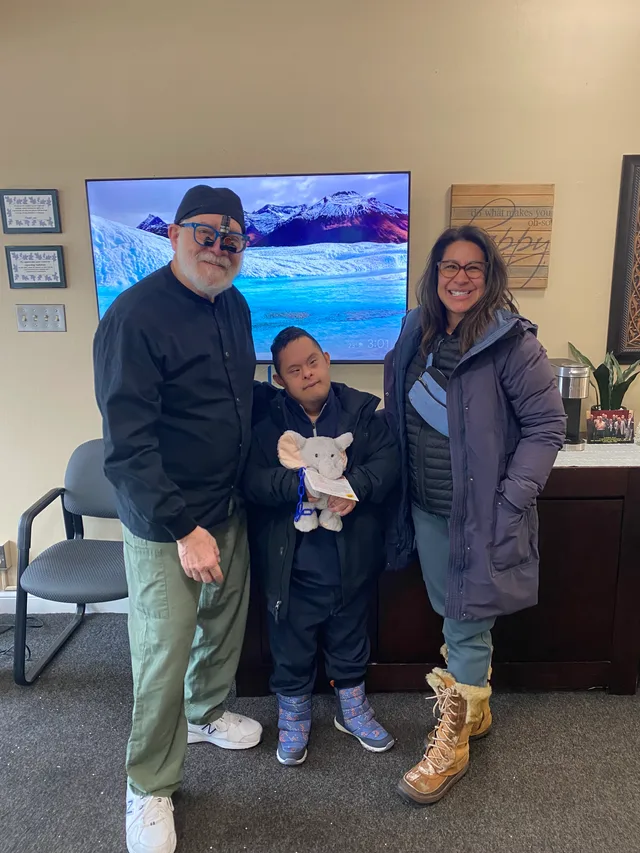
You belong here. Today, when a special needs patient becomes part of our family, they receive their own Oscar the Elephant. It is more than a stuffed elephant. It is their induction into a very special family.
Oscar says, "You're one of us now."
You have a dental home. You have people who know you, care about you and want you here.
For more than 50 years, Dr. Scapillato has cared for people with special needs. He saw families struggle to find dental care, sometimes calling office after office, sometimes postponing treatment, and sometimes giving up. He believed these families deserved better.
That belief grew into a mission.
The Special Smiles Foundation was created to help special needs patients and their families receive the dental care they deserve, including helping subsidize part of care when financial obstacles stand in the way.
Oscar became the symbol of that mission. Because an elephant herd doesn't measure worth by how quickly someone moves or how independently they function.
They simply belong. Every time an Oscar the Elephant is placed into the hands of a special needs patient, another chapter of Oscar's story is written. Another person joins our herd; a place where someone will take the time, where someone will understand, and where they belong. |
| |
|
|
| Referred patients may also request an appointment online at our website using the button in the upper right corner of our home page. Donate to Special Smiles Foundation |
| |
|
|
| Referred patients may also request an appointment online. Click the button below to request an appointment. |
| |
|
|
| God Willing and the Creek Don't Rise |
| |
|
|
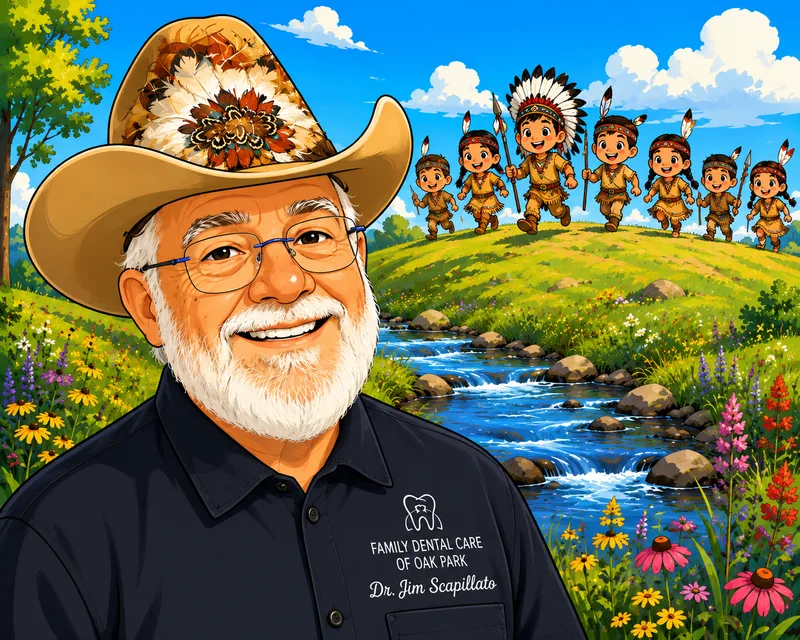
| You have probably heard someone say,“God willing and the creek don’t rise.”It is an old-fashioned way of saying,“I’ll be there, unless something beyond my control prevents it.” But there is a fascinating story behind the expression. One popular account connects the saying to Benjamin Hawkins, an early American statesman and Indian agent who worked closely with the Muscogee (Creek) Nation. Legend says Hawkins used the phrase referring not to rising water, but the possibility of the Creek people rising in resistance. Historians, however, have never found convincing evidence that Hawkins actually coined the expression, and most believe “creek” really did mean a rising stream. |
| |
|
|
| Either way, the story caught our attention for a special reason. Our own Ivone is a descendant of the Taino tribe from Puerto Rico.So around here,“God willing and the Creek don’t rise” suddenly has a little more meaning, and a personal connection to history! |
| |
|
|
| Family Dental Care of Oak Park — 708-406-9984 -- www.FamilyDentalCareOf OakPark.com |
| |
|
|
|